You’ve invested in beautiful hardwood floors. Your sofa cost more than you’d like to admit. That stunning rug in the living room? A treasured purchase from your last holiday.
Now imagine watching them all fade, crack, and deteriorate — simply because sunlight streams through your windows every day.
Here’s the thing: ultraviolet (UV) radiation doesn’t just give you sunburn. It’s silently destroying your home’s interior, damaging everything it touches. And whilst you might think any window covering will do the job, not all blinds offer the same level of protection.
In this guide, you’ll discover why UV protection in wooden blinds matters, how it works, and what you need to know before making your next purchase. Whether you’re safeguarding your furniture or protecting your family’s health, understanding UV protection could save you thousands of pounds in the long run.
What Exactly Is UV Radiation and Why Should You Care?
UV radiation is invisible light that comes from the sun. It splits into three types: UVA, UVB, and UVC. Whilst UVC gets blocked by Earth’s atmosphere, both UVA and UVB penetrate through your windows — even on cloudy days.
UVA rays make up about 95% of the UV radiation reaching your home. They’re sneaky. They travel deeper into materials, causing long-term damage that you won’t notice until it’s too late. Your cream sofa starts looking yellow. That oak dining table develops dark patches. The vibrant colours in your children’s artwork on the wall begin to wash out.
UVB rays are stronger but don’t penetrate as deeply. They’re the ones primarily responsible for sunburn on your skin. But here’s what matters: both types cause damage to your belongings and pose health risks to your family.
Standard glass blocks most UVB radiation but lets through roughly 75% of UVA rays. This means your windows — whilst protecting you from sunburn — aren’t stopping the gradual deterioration of your home’s interior.
Sound familiar? You’re not alone. Thousands of UK homeowners discover this problem only after noticing faded patches on their carpets or discoloured furniture.
How UV Rays Damage Your Home (And Your Wallet)
Let’s talk about what UV radiation actually does to your belongings.
Fabrics fade. That’s the most obvious sign. Your curtains, upholstery, and cushions lose their vibrant colours, turning dull and lifeless. The process happens gradually, so you might not notice until you move a piece of furniture and see the stark contrast between protected and exposed areas.
Wood deteriorates differently. UV exposure breaks down the lignin in wood — the natural polymer that gives it strength and colour. Your beautiful wooden floors start to lighten or darken unevenly. Hardwood furniture develops a bleached appearance. Even worse, the damage isn’t just cosmetic. UV radiation weakens wood fibres, making them brittle and prone to cracking.
Artwork and photographs suffer terribly. Those family photos on the mantelpiece? The colours fade. That painting you inherited from your grandmother? Its pigments break down, losing their original brilliance forever.
Here’s the financial reality: replacing sun-damaged flooring can cost £40 to £100 per square metre. A quality sofa runs anywhere from £800 to £3,000. Refinishing hardwood floors? You’re looking at £1,500 to £3,000 for an average-sized room.
Prevention costs far less than replacement. That’s where proper window blinds with UV protection become an investment rather than an expense.
The Health Risks You Can’t See
UV protection isn’t just about preserving your belongings. It’s about protecting your family’s health too.
Prolonged UV exposure indoors increases your risk of skin damage and premature ageing. Think about it: you spend hours near windows whilst working from home, relaxing in your conservatory, or simply enjoying your living room. Those UVA rays are reaching you every single day.
The World Health Organisation confirms that UV radiation is a proven human carcinogen. Whilst the risk indoors is lower than direct sun exposure, it’s cumulative. Years of indoor UV exposure add up, particularly for young children whose skin is more sensitive.
Your eyes are vulnerable too. UV radiation contributes to cataracts and other eye conditions. If you’ve got a home office by a sunny window, this matters more than you might realise.
Want to know the secret? Effective UV blocking doesn’t require you to live in darkness. Modern wooden blinds can filter harmful rays whilst still allowing natural light to brighten your space.
How Wooden Blinds Block UV Radiation
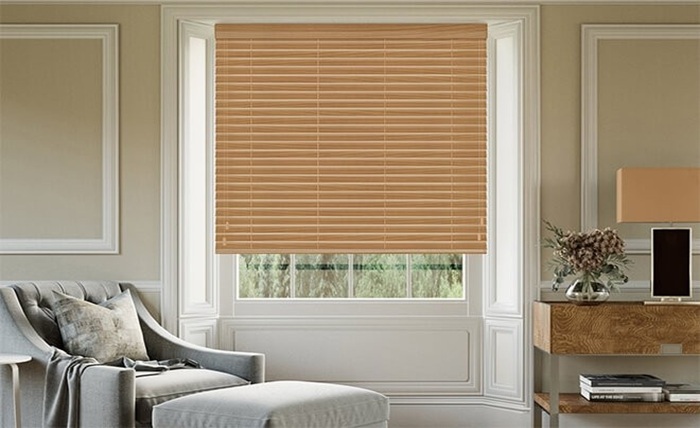
Wooden blinds work as a physical barrier between harmful UV rays and your home’s interior. But not all wooden blinds provide equal protection.
The slat angle matters enormously. When closed completely, quality wooden blinds can block up to 99% of UV radiation. Adjust them to allow filtered light, and they’ll still block 60% to 80% of harmful rays — far more than standard glass alone.
The wood thickness and density play crucial roles too. Thicker slats made from hardwoods naturally block more UV radiation than thin, lightweight alternatives. Basswood, oak, and bamboo offer excellent UV protection due to their dense cellular structure.
Special UV-resistant finishes enhance protection further. Many manufacturers apply protective coatings that not only shield the blinds themselves from UV damage but also increase their UV-blocking capabilities. These finishes prevent the wood from fading, cracking, or warping over time.
Here’s what the research shows:
| Blind Position | UV Blockage | Light Control | Privacy Level |
| Fully Closed | 95-99% | Maximum | Complete |
| Angled Down | 70-80% | Moderate | High |
| Angled Up | 60-70% | Good | Moderate |
| Fully Open | 0-10% | Maximum Light | Minimal |
This flexibility gives you control. You can maximise UV protection when needed whilst still enjoying natural daylight during overcast days or times when sun exposure is minimal.
Comparing Wooden Blinds to Other UV Protection Options
How do wooden blinds stack up against alternatives?
Roller blinds with blackout fabric block UV rays effectively when closed. The exception is when you want natural light — opening them completely removes all protection. They’re an all-or-nothing solution.
Venetian blinds (typically aluminium) offer good UV protection and adjustability similar to wooden blinds. However, metal heats up quickly in direct sunlight, making rooms uncomfortably warm. Wood stays cooler, providing better thermal insulation.
Curtains block UV radiation when drawn but create a cave-like atmosphere. They’re bulky, collect dust, and don’t offer the precise light control that slatted blinds provide.
UV window film applies directly to glass, blocking up to 99% of UV rays whilst maintaining transparency. It works brilliantly but doesn’t give you flexibility. The film is permanent, doesn’t control light levels, and provides no privacy.
Wooden blinds offer the best balance: excellent UV protection, precise light control, thermal insulation, aesthetic appeal, and privacy — all in one package.
Newblinds.co.uk Limited specialises in high-quality wooden blinds designed specifically for UK homes. As the UK’s first online blinds retailer since 1999, they’ve helped thousands of homeowners find the perfect UV protection solution without compromising on style or functionality.
Choosing the Right Wooden Blinds for Maximum UV Protection
Not every wooden blind offers the same level of protection. Here’s what to look for.
Slat width affects coverage. Wider slats (50mm or 63mm) provide better UV blocking than narrow ones (25mm or 35mm) because they overlap more when closed, minimising gaps where UV rays might penetrate.
Wood type influences durability and protection. Basswood offers excellent UV resistance whilst remaining lightweight and affordable. Oak provides superior strength and natural UV blocking properties but costs more. Bamboo combines sustainability with impressive UV resistance and moisture tolerance.
Finish quality determines longevity. Look for blinds with multiple coating layers that include UV-resistant properties. These finishes prevent the blinds themselves from fading or degrading whilst enhancing their UV-blocking capabilities.
The exception is when you need moisture resistance. Standard wooden blinds shouldn’t be used in bathrooms or high-humidity areas. Faux wood alternatives offer similar UV protection whilst withstanding moisture without warping.
Installation precision matters too. Even the best UV-protective blinds won’t work properly if they don’t fit your windows correctly. Custom-made blinds ensure complete coverage with minimal gaps around edges where UV rays might sneak through.
The Hidden Benefits of UV Protection in Wooden Blinds
UV protection delivers advantages beyond preventing faded furniture.
Energy efficiency improves dramatically. By blocking UV radiation, wooden blinds reduce solar heat gain during summer, keeping rooms cooler without overworking your air conditioning. In winter, wood’s natural insulating properties help retain warmth. This dual benefit can lower your energy bills by 10% to 25%, according to studies.
Your blinds last longer too. UV-resistant finishes protect the wood itself from sun damage. Whilst unprotected wooden blinds might fade, crack, or warp within five to seven years, quality UV-protected blinds can last fifteen years or more with minimal maintenance.
Indoor comfort increases noticeably. Reducing UV radiation means less glare on screens, making working from home more pleasant. Your rooms maintain more consistent temperatures. You can enjoy natural light without the harsh, damaging effects of direct sunlight.
Home value gets a subtle boost. Energy-efficient window treatments are increasingly attractive to potential buyers. Well-maintained, high-quality wooden blinds with UV protection demonstrate that a property has been cared for thoughtfully.
Newblinds.co.uk Limited offers expert guidance on selecting wooden blinds that maximise these benefits. Their team’s 46 years of family experience in the window blinds industry ensures you receive honest advice tailored to your specific needs, whether you’re protecting a period property or a modern new-build.
Maintenance Tips to Preserve UV Protection
Your wooden blinds will protect you better if you protect them properly.
Regular dusting prevents buildup that can reduce UV-blocking efficiency. Use a microfibre cloth or a blind-specific duster once weekly. This doesn’t work if you let dust accumulate for months — it becomes harder to remove and can scratch protective finishes.
Deep cleaning every three to four months maintains optimal performance. Wipe each slat with a barely damp cloth and mild soap solution. Dry immediately to prevent water damage. Never soak wooden blinds or use harsh chemicals that might strip UV-protective coatings.
Inspect mounting hardware periodically. Loose brackets or damaged tilt mechanisms prevent blinds from closing properly, creating gaps where UV rays penetrate. Tighten screws and lubricate moving parts with a light oil once or twice yearly.
Reapply protective finishes if you notice fading or wear. Some manufacturers offer refinishing kits specifically designed for their products. This extends your blinds’ lifespan whilst maintaining UV protection levels.
Avoid these common mistakes: never use abrasive cleaners, don’t position heat sources directly beneath blinds, and don’t force stuck mechanisms — gentle persistence works better than brute force.
Cost vs. Value: Is UV Protection Worth the Investment?
Let’s talk numbers honestly.
Quality wooden blinds with UV protection typically cost £100 to £300 per window, depending on size, wood type, and customisation. Faux wood alternatives run £80 to £200. These prices might seem steep compared to basic roller blinds at £30 to £80.
But here’s what matters: the value proposition changes completely when you factor in what you’re protecting.
Consider a typical living room with three windows. Premium UV-protective wooden blinds might cost £600 to £900 total. Without protection, you could face:
Carpet replacement: £1,500 to £3,000
Sofa reupholstering or replacement: £800 to £3,000
Hardwood floor refinishing: £1,500 to £3,000
Window treatment replacement (if cheap blinds fade): £200 to £400
That’s potentially £4,000 to £9,400 in damage and replacement costs over ten years — far exceeding the initial investment in quality UV protection.
Energy savings add another dimension. If UV-blocking blinds reduce your energy bills by just £10 monthly (a conservative estimate), that’s £120 annually or £1,200 over ten years.
The calculation becomes simple: spending £900 upfront potentially saves you £5,200 to £10,600 over a decade. That’s a return on investment ranging from 478% to 1,078%.
Look at it this way: every pound spent on quality UV-protective wooden blinds returns five to ten pounds in preserved value and reduced costs. Few home improvements offer comparable returns.
Frequently Asked Questions
Do wooden blinds block all UV rays?
Wooden blinds block 95% to 99% of UV rays when fully closed. Even partially open, they still block 60% to 80% of harmful radiation. The exact percentage depends on slat width, wood density, and whether the blinds feature UV-resistant coatings. Complete UV blockage requires complete closure, but wooden blinds offer excellent protection whilst still allowing filtered natural light into your home.
How long do UV-protective wooden blinds last?
Quality wooden blinds with UV-resistant finishes typically last 12 to 20 years with proper maintenance. Standard wooden blinds without UV protection might deteriorate within 5 to 8 years when exposed to regular sunlight. The investment in UV-protective coatings significantly extends lifespan whilst maintaining appearance and functionality. Regular cleaning and occasional refinishing can push quality blinds beyond 20 years of service.
Can I install UV-protective wooden blinds in bathrooms?
Traditional wooden blinds aren’t recommended for high-humidity areas like bathrooms because moisture causes warping and mould growth. However, faux wood blinds offer similar UV protection whilst resisting moisture damage. They’re engineered to look and feel like real wood but won’t deteriorate in humid conditions. For bathrooms, choose faux wood alternatives that combine UV protection with moisture resistance.
Are UV-protective wooden blinds worth it for north-facing windows?
Yes, though the urgency is lower. North-facing windows receive less direct sunlight but still allow UV radiation throughout the day, particularly during summer months when the sun’s position shifts. UV damage accumulates over time regardless of window orientation. North-facing rooms benefit from UV protection, though you might prioritise south and west-facing windows first if budget constraints require phased installation.
Make the Right Choice for Your Home’s Future
UV protection in wooden blinds isn’t just about preventing faded furniture. It’s about making one smart decision that protects your investment for years to come.
You now understand how UV radiation damages your belongings, threatens your family’s health, and costs you money through energy waste and premature replacement. You’ve seen how wooden blinds offer superior protection whilst maintaining the flexibility to enjoy natural light when you choose.
The evidence speaks clearly: quality UV-protective wooden blinds deliver returns that far exceed their initial cost. They preserve your home’s interior, reduce energy consumption, last for decades, and provide precise control over light and privacy.
When you’re ready to make this investment, Newblinds.co.uk Limited stands as the UK’s most trusted online retailer for custom-made wooden blinds. As a family business operating since 1999, they combine decades of industry expertise with genuine commitment to quality and customer satisfaction. Their partnerships with independent UK fabricators ensure you receive truly bespoke products made to your exact specifications.
Your home deserves protection that works as hard as you do. Don’t wait until you spot the first faded patches on your carpet or notice your hardwood floors developing uneven colouration. Take action now, whilst prevention remains far cheaper than replacement.
Ready to protect your home’s future? Explore the comprehensive range of UV-protective wooden blinds available at Newblinds.co.uk and discover why thousands of UK homeowners trust them for expert advice and superior quality.