If multiple sclerosis has come up during a doctor’s visit, your brain probably went into overdrive. You may have heard that MS is hard to diagnose, and that part is true. There isn’t one test that gives a clear answer. Instead, doctors rely on several tests that work together to build a clear picture. That process can feel slow and stressful, especially when symptoms are already worrying you. Understanding how testing works can make it feel less overwhelming and a bit more manageable.
MS affects the central nervous system, which includes the brain and spinal cord. Because symptoms can overlap with many other conditions, tests used to diagnose multiple sclerosis focus on gathering strong evidence rather than rushing to conclusions. That careful approach protects you from the wrong diagnosis and the wrong treatment.
MRI Scans and What They Show
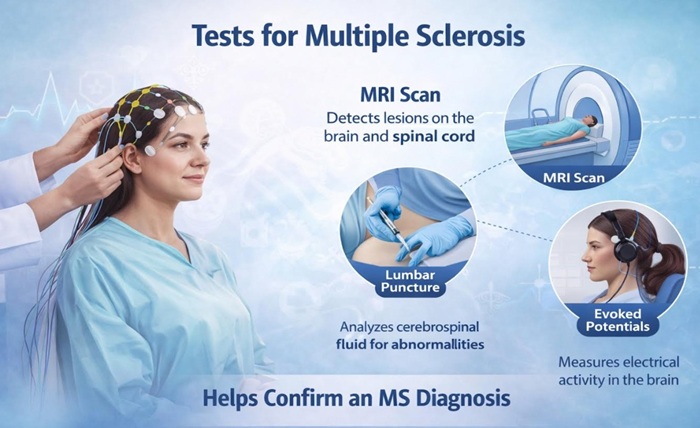
MRI scans are one of the most important tools used when MS is suspected. These scans create detailed images of the brain and spinal cord, allowing doctors to look for areas of inflammation or damage called lesions. In people with MS, lesions often appear in specific locations and patterns that raise concern.
The scan itself doesn’t hurt, but it does require lying still in a noisy machine long enough to question your life choices. Some scans use contrast dye to highlight active inflammation, which helps show whether changes are new or older. MRI results alone don’t confirm MS, but they provide critical information that guides the rest of the evaluation.
Blood Tests and Why They’re Done
Blood tests are commonly ordered early in the process, even though they don’t diagnose MS directly. Their main role is to rule out other conditions that can cause similar symptoms. Vitamin deficiencies, infections, and autoimmune diseases can all mimic MS in ways that aren’t obvious at first.
This step can feel indirect, especially when you’re eager for answers. Still, it’s an important part of getting the diagnosis right. MS is diagnosed by gathering evidence and excluding other possibilities, which makes blood work a key piece of the puzzle.
Spinal Fluid Testing and Its Purpose
In some cases, doctors recommend testing spinal fluid through a lumbar puncture. This test looks for signs of immune system activity around the brain and spinal cord. Certain findings can support an MS diagnosis when imaging and symptoms don’t tell the full story.
The idea of this test often sounds worse than it is. While it’s not exactly a highlight of anyone’s week, it’s usually well tolerated and provides valuable information. Results from spinal fluid testing can help confirm whether inflammation is part of what’s causing symptoms.
Tests That Measure Nerve Signals
Doctors may also use tests that measure how quickly nerve signals travel. These tests evaluate how the brain responds to visual or sensory input. Slower responses can point to nerve pathway changes, even when symptoms are mild.
These tests are painless and don’t involve needles, which usually comes as welcome news. While they aren’t used in every case, they can help confirm subtle nervous system changes when other test results are unclear.
Why the Testing Process Takes Time
One of the hardest parts of MS testing is waiting. Symptoms may come and go, scans may be repeated, and follow-up appointments may be spaced out over months. This timeline can feel frustrating, but it serves a purpose.
MS is diagnosed based on evidence that nerve damage occurred at different times and in different areas of the nervous system. Careful monitoring helps avoid mistakes and ensures treatment decisions are appropriate.
A More Grounded Way to View MS Testing
Testing for multiple sclerosis can feel drawn out, but it’s designed to protect you. Each test adds clarity, not pressure. Not everyone who gets tested ends up with an MS diagnosis, and ruling it out is just as valuable as confirming it.
Understanding what each test does and why it’s used can ease anxiety while you wait. The process may not move fast, but it moves toward accuracy. And when it comes to something as important as your health, getting it right matters more than getting it quickly.