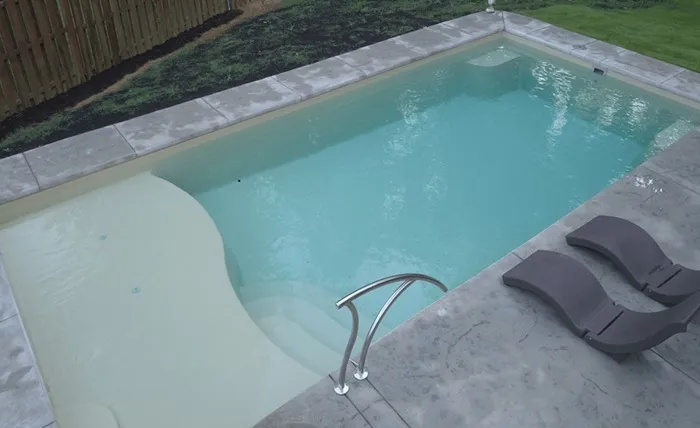
Choosing the right inground swimming pool design is one of the biggest decisions you’ll make for your home. It affects how you use your backyard, how much maintenance you’ll manage, and how well the space supports your family’s lifestyle long term.
An inground pool is not just about shape or finish. It involves structural planning, compliance with Australian safety standards, soil conditions, drainage, and how the pool integrates with your outdoor living areas. When these elements are considered properly from the beginning, the result is a pool that performs well and remains enjoyable for years.
If you’re exploring different styles of inground swimming pools, it helps to break the decision down into structure, usage, space, and safety.
Start With How You’ll Use the Pool
Before selecting a shape or depth, clarify how the pool will actually be used.
Ask yourself:
- Is it primarily for family recreation?
- Will it be used for lap swimming?
- Do you entertain frequently?
- Are young children part of the household?
- Is it for relaxation and visual appeal?
A narrow lap pool suits fitness-focused households. A wider pool with shallow zones supports families with children. If entertaining is a priority, step areas, integrated seating, and open surrounds often matter more than total length.
Choosing a pool based on lifestyle avoids overbuilding or underbuilding for your needs.
Understand the Benefits of Concrete Construction
Concrete inground pools offer design flexibility that other pool types cannot match. They can be shaped to suit irregular blocks, sloping land, or architectural layouts.
Advantages of concrete pools include:
- Custom shapes and depths
- Flexible internal finishes
- Durability under Australian conditions
- Adaptability for integrated spa zones or water features
Customisation becomes especially important when working around existing landscaping, retaining walls, or elevated patios. A well-designed concrete pool can enhance the visual flow of your backyard rather than compete with it.
Match Pool Size to Block Size and Orientation
Pool size should reflect both usable yard space and sun exposure.
In Australia, positioning a pool to maximise northern sunlight can improve comfort and reduce heating costs. Wind direction also plays a role, as strong prevailing winds increase evaporation and cooling.
Consider:
- Distance from the home
- Access pathways
- Drainage slopes
- Overhead structures or shading
- Future landscaping plans
A pool that dominates a small yard can make the space feel cramped. Conversely, a pool that is too small for a large entertaining area may feel underwhelming.
Balance proportion carefully.
Plan for Safety From Day One
Safety is not an afterthought. It is a core requirement in all Australian pool builds.
AS 1926.1:2024, Swimming pool safety – safety barriers for swimming pools, establishes updated guidelines for the design and installation of compliant pool barriers. The revised standard clarifies non-climbable zones, gate hardware requirements, and positioning of objects near fencing.
Key areas addressed in AS 1926.1:2024 include:
- Non-climbable zones around barriers
- Updated gate latch and hinge reliability requirements
- Clearer diagrams and definitions for compliance
- Positioning of plants and structures near fencing
These updates aim to reduce the risk of unsupervised child access to pools.
When choosing between different inground swimming pools, confirm that the builder designs barrier systems aligned with the current standard. Safety compliance protects families and avoids costly rectification work later.
Consider Long-Term Maintenance
Pool ownership includes ongoing care.
Maintenance requirements vary depending on:
- Surface finish
- Filtration systems
- Surrounding landscaping
- Usage frequency
Concrete pools offer long service life, but finishes such as tiles or interior coatings require periodic care. Automated filtration and cleaning systems reduce daily involvement but require upfront investment.
Discuss filtration capacity, pump efficiency, and water circulation design early in the planning stage. Poor hydraulic planning can lead to uneven chemical distribution or surface debris build-up.
Heating and Energy Efficiency
Heating extends the usable season of your pool. Options typically include:
- Solar heating
- Heat pumps
- Gas heating
Solar works well in high-sun regions but depends on roof space. Heat pumps provide controlled temperature management. Gas heating offers rapid warming but higher operating costs.
Energy-efficient pumps and LED lighting reduce operating expenses over time.
Choosing heating should align with how often you expect to swim outside peak summer months.
Integrating the Pool With Outdoor Living
Modern pool design rarely exists in isolation. It forms part of a broader outdoor living strategy.
Think about:
- Connection to alfresco dining
- Decking or tiling transitions
- Privacy screening
- Shade structures
- Outdoor kitchens
A well-integrated pool enhances the value of the entire backyard rather than becoming a standalone feature.
When reviewing design options, assess how the pool interacts visually and functionally with the home.
Budget Beyond the Shell
Initial construction is only part of the total investment.
Budget considerations should include:
- Excavation complexity
- Soil stability
- Drainage solutions
- Electrical and plumbing integration
- Safety fencing
- Landscaping restoration
Sloping sites or reactive soils may increase engineering requirements. Transparent discussions with your builder about site conditions help avoid unexpected costs during construction.
Work With Experienced Designers
Choosing the right partner matters.
An experienced pool builder understands not only aesthetics but also engineering, compliance, and hydraulic performance. Clear documentation, design consultation, and transparent communication contribute to a smoother build.
Review previous projects, understand construction timelines, and ensure compliance with updated safety standards such as AS 1926.1:2024.
Making the Right Choice
The right pool is not necessarily the largest or most elaborate. It is the one that fits your home, meets safety requirements, aligns with your lifestyle, and performs reliably over time.
When exploring different inground swimming pools, focus on:
- Structural flexibility
- Orientation and placement
- Safety compliance
- Long-term maintenance
- Energy efficiency
- Lifestyle alignment
A well-chosen pool becomes a long-term asset that enhances family time, outdoor entertaining, and property value.
If you’re ready to explore design options in more detail, review custom concrete inground swimming pools and discuss how your block, layout, and lifestyle can shape the final result.